PurPur
- 3.6
- Rating
- 100.00K
- Installs
- Free
- Price

 Analysis by App-foxy
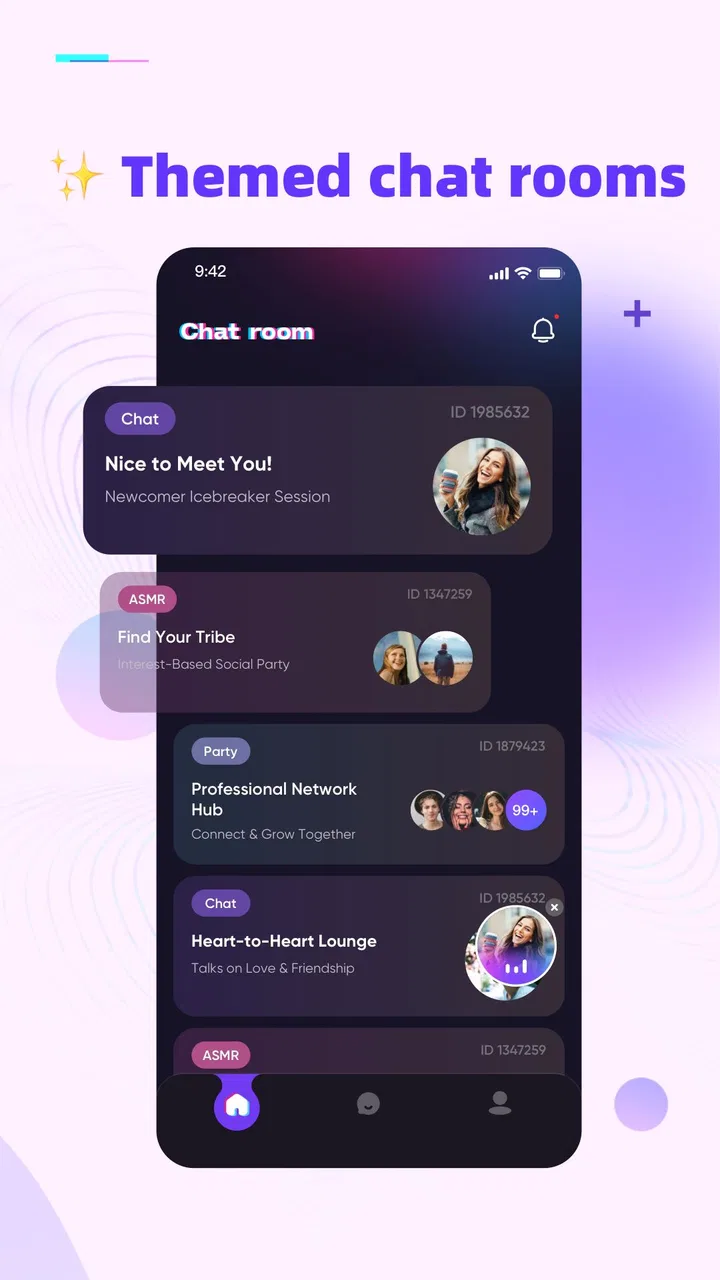
PurPur is a social app from purpur.live that puts spontaneous connection at the center of the experience. I approached it less like a traditional messaging tool and more like a place to discover people, start conversations, and turn a quiet moment into something more social. Its store summary points toward finding buddies and throwing parties, and that gives the app a lively, informal personality rather than the feeling of a structured community platform.
That personality is also what makes the app interesting to me. It is aimed at adults who want social interaction to feel quick and casual, not like another task to manage. At the same time, the experience depends heavily on being connected at the right moment. When the network is responsive, the app’s appeal is easy to understand: open it, see what is happening, and decide whether you want to join in. When the connection is weak or the available activity is quiet, the same immediacy can become a limitation.
PurPur is free to install, with optional in-app purchases ranging from $3.99 to $99.99 per item. It carries a Mature 17+ rating, so it is not an app I would recommend casually to younger users or to anyone expecting a family-oriented social space. The current version is 1.7.0, and it runs on Android 8.0 or later. Its average rating is 3.6 from over 180 ratings, while the app has passed 100,000 installs, which suggests a real audience but also leaves room for a varied experience depending on who is active when you open it.
You May Also Like

 AccuWeather: Weather Radar
AccuWeather Review: A Quick, Clear Forecast for Everyday Decisions
For everyday plans, the best forecast is the one you can understand quickly. AccuWeather makes rain timing, radar, and local conditions easy to act on, with a few trade-offs.

 Hill Climb Racing
Why Hill Climb Racing Still Turns Crashes Into One More Run
A tiny car, a bumpy hill and one more upgrade: Hill Climb Racing keeps resurfacing because its simple chaos makes every near-miss feel personal.

 AliExpress - Shopping App
AliExpress Makes Global Shopping Feel Personal, but Shoppers Bear the Risk
AliExpress turns a global marketplace into a pocket-sized discovery engine. Its reach is useful, its shopping loop compelling, and its trade-offs easy to miss.

 Lords Mobile: Kingdom Wars
Lords Mobile Is a Kingdom-Building Routine, Not a Quick Match
A case-by-case verdict on the building, battles, device demands, and social commitments that make Lords Mobile rewarding for some players and exhausting for others.

 PDF Scanner app - TapScanner
TapScanner Makes Paperwork Easier to Capture, Check, and Share
TapScanner makes scanning with a phone feel less like a rescue operation and more like a dependable step in getting work done. Its capture tools are useful, though not flawless.

 Block Blast!
 Shows How Much a Puzzle Game Can Leave Out
A quiet grid game shows why puzzle players increasingly value instant clarity, repeatable skill and low-pressure play—and where the genre still needs to catch up.
More From Our News Desk
View All News


How PurPur feels when the connection is doing the work
I find that a reliable connection matters here for more than getting screens to load: it helps me make sense of whether an interaction has moved forward. In this section, I’m looking at how to keep a social session manageable when reception wavers, including a practical way to avoid duplicate actions and a sensible point to pause rather than force the moment.
Social discovery works best in short, connected sessions
My first impression is that PurPur makes more sense as a check-in app than as something I would leave open all day. The core attraction is the possibility of finding a person or group that matches my mood right now. That could be a quick conversation during a break, a more energetic social session in the evening, or a way to make an otherwise ordinary moment feel less isolated.
This kind of use depends on timing. A conventional social network gives me a large feed to browse even when I am not ready to talk. A private messenger is useful because I already know who I want to contact. PurPur sits between those patterns: it is more open-ended than a direct chat app, but it does not have the same guaranteed relevance as a familiar contact list. I need to be willing to explore and accept that the best interaction may not appear immediately.
That makes the app particularly suitable for people who enjoy low-pressure discovery. I can imagine using it after moving to a new area, while waiting for friends to arrive, or during an evening when I want company without arranging a formal event. It is less convincing for someone who wants a predictable group of close contacts, a carefully organized community, or a permanent archive of conversations.
A realistic everyday scenario
Imagine finishing work with no plans for the evening. Instead of opening a general feed and scrolling without direction, I open PurPur with a specific intention: I want to see whether there is a social conversation or party-like activity that fits my energy. If I find something appealing, the value comes from joining quickly rather than spending twenty minutes customizing my profile or planning the perfect message.
That same scenario also shows the trade-off. If the network is slow, if the session does not load properly, or if there is little activity at that time, the app cannot create the social moment by itself. It can help me look for connection, but it cannot guarantee that the right people will be available. I would keep expectations flexible and treat it as an opportunity rather than a scheduled service.
Why mobile context matters
PurPur feels most natural on a phone because the situations it targets are mobile situations: spare minutes, changing plans, waiting around, or deciding at short notice that I want to be more social. The phone format lowers the barrier to checking in, but it also means I would use it differently from a desktop community or a long-form social network.
On a small screen, speed and clarity matter. I would avoid opening it while rushing through a station or doing anything that needs my full attention. A social app built around live interaction can encourage quick decisions, and that is useful when I have time to participate, but distracting when I am only trying to fill a few seconds.
My practical advice is to use PurPur in deliberate windows. Open it when I can actually respond, listen, or stay with a conversation for a while. Checking it during a short pause can be enjoyable, but joining a social activity and then disappearing because I have reached my destination is not a great experience for me or for the people involved.
It is also worth separating private comfort from public convenience. A busy café, a commute, or a shared room may be fine for browsing, but I would be more careful before starting a personal conversation where others can see or hear what is happening. The Mature 17+ rating is another reason to use judgment about surroundings and the kind of interaction I choose to enter.
What a weak connection changes
Because PurPur is centered on people and live social activity, network quality shapes more than loading speed. A delayed screen can make it difficult to tell whether an action worked, whether another person has responded, or whether a session is still active. In an ordinary content app, a delay is annoying. In a social app, it can interrupt the rhythm that makes the interaction worthwhile.
I would therefore avoid making important decisions based on a single stalled screen. If something appears frozen, I would pause before tapping repeatedly, check whether the connection has stabilized, and then try again once. Repeated taps can create uncertainty about whether I have joined something more than once or sent an action that was simply slow to appear.
This is one of the less obvious considerations with PurPur: the app’s value is not only in what it offers, but in whether the timing feels trustworthy. A social space needs enough responsiveness for me to understand the state of the conversation. If I regularly use it in places with unreliable reception, I should expect a less consistent experience than someone using it on a strong connection at home.
Failure, interruption, and getting back into the moment
Every connected social app has awkward failure points, and PurPur is especially exposed because its purpose is immediate interaction. A dropped connection can happen while I am browsing, while I am trying to join an activity, or after I have already started engaging. Those moments are not equal. Losing a page before I choose anything is minor; losing the flow of a conversation is much more noticeable.
My recovery routine would be simple rather than aggressive. I would first wait briefly, then retry the specific action once the connection is stable. If the app returns me to a general screen instead of the place I was in, I would treat that as a fresh starting point rather than assuming every previous action carried through. That approach avoids confusion and prevents me from overreacting to a temporary network problem.
I would also avoid using a weak connection for anything that requires careful judgment. Social interactions can move quickly, and a delayed response may look like disinterest or a repeated action may look clumsy. If the app is struggling, it is better to step away and return later than to force the session and make decisions without knowing what has actually happened.
This is a meaningful difference from asynchronous messaging. With a standard messenger, I can write something, send it, and return when convenient. PurPur’s appeal is more immediate, so interruptions have a bigger effect on the experience. People who dislike uncertainty around live social activity may prefer a slower, more predictable alternative.
Using it without wasting mobile data
I would be thoughtful about where and how I use PurPur on a limited mobile plan. Social apps can involve repeated loading, live updates, media, or other data-heavy activity, and the most enjoyable sessions are often the ones that last longer than a quick check. Even without measuring consumption, the sensible approach is to reserve extended use for a connection I trust and keep mobile sessions intentional.
A useful habit is to decide what I want before opening the app. If I am only curious about whether anything is happening, I can check briefly and close it. If I intend to join a social session, I can wait until I have enough time and a reliable connection. This reduces the temptation to reopen the app repeatedly just because the first attempt was interrupted or unproductive.
I would also pay attention to battery behavior during longer sessions. Keeping a social app active while moving between places can be inconvenient even when the network is fine. A short, focused session is easier to manage than leaving the app running in the background while I do unrelated tasks. For me, data-conscious use is not about avoiding PurPur; it is about matching the length of the session to the quality of the connection and the amount of attention I can give.
Free entry, optional spending, and expectations
The free entry point makes it easy to test whether PurPur suits my social style before spending anything. That is important here because the app’s usefulness depends on personal fit, timing, and the kind of activity I enjoy. I would use the free experience first, learn how the social flow feels, and only then consider whether any optional purchase adds enough value for me.
The purchase range is broad, from a few dollars to items priced close to one hundred dollars. That does not automatically make the app poor value, but it does mean I would be careful with impulse spending, especially in an environment designed around quick social decisions. I would set a personal limit before exploring paid items and avoid treating a purchase as a guarantee of better conversations or more satisfying activity.
For me, the right question is not whether PurPur has paid options, but whether I already enjoy the free social experience. If I do not find the basic discovery process comfortable, spending more is unlikely to solve that problem. If I consistently use the app and understand exactly what an optional item changes for my experience, then I can make a more informed choice.
Who should try it, and who should skip it
I would recommend PurPur to adults who like meeting people casually, enjoy spontaneous social plans, and are comfortable with an experience that depends on who is available at the time. It may also suit someone who wants a lighter alternative to carefully curated social networks. The app’s appeal is strongest when I am open to unexpected interaction rather than searching for one exact person or one guaranteed type of event.
I would be more hesitant to recommend it to someone who wants a quiet, private tool for maintaining existing friendships. A direct messenger is better when I already know my contacts and need dependable communication. A traditional social network may be better when I want a broad feed, saved posts, and slower browsing. A dedicated community platform may be a better choice when I care about detailed topics, moderation structure, or long-term group organization.
PurPur is also not the right fit for anyone under its Mature 17+ age guidance, or for users who are uncomfortable with adult-oriented social environments. Even for eligible adults, I would keep personal boundaries clear and avoid assuming that a friendly first interaction automatically deserves trust. The app can make meeting people easier, but basic online caution still matters.
Three habits that improve the experience
Choose the connection before choosing the conversation. If I am on unstable mobile reception, I would browse lightly and postpone a longer interaction until the network is dependable. This protects the flow of the session and reduces uncertainty about whether actions have registered.
Use a clear purpose for each visit. I might open PurPur to find a buddy, join a social moment, or simply see what is active. Knowing my purpose helps me leave when there is nothing suitable instead of repeatedly refreshing and turning the app into aimless scrolling.
Separate curiosity from spending. I would explore the free experience first, then decide whether an optional item addresses a real need. A purchase should support a pattern of use I already enjoy, not compensate for weak connectivity or a quiet session.
These habits sound simple, but they address the main friction points I noticed: timing, uncertainty, and the temptation to keep trying when the conditions are not right. They also make the app feel more intentional. Rather than expecting PurPur to provide constant entertainment, I use it when I genuinely want a social opening.
My connectivity verdict
PurPur succeeds most when the phone, the network, and the available community line up at the same time. In those moments, its informal approach can feel more inviting than a conventional feed and less demanding than organizing a full event. I like that the concept encourages spontaneous interaction instead of requiring a long setup process.
Its weakness is inseparable from that strength. The app cannot feel equally useful in every place or at every hour, because social discovery depends on responsive communication and active participation. A weak connection, an interrupted session, or an empty-feeling moment can make the experience seem less rewarding than the idea suggests.
After considering those trade-offs, I see PurPur as a worthwhile free experiment for adults who want casual, mobile-first social discovery. I would not use it as my only communication app, and I would not recommend it to someone seeking a predictable private messenger or a structured community. But if I wanted to find new buddies, explore spontaneous social activity, and accept that the quality of the moment depends on connectivity and participation, I would keep it installed and use it selectively.
My final recommendation is to try PurPur with realistic expectations: use it on a stable connection, protect your time and personal boundaries, and judge it by the quality of the interactions you actually find rather than by the promise of constant activity. That approach gives the app its best chance to be fun without ignoring the network-dependent nature of the experience.
FAQs for PurPur
01What is PurPur, and what can I use it for?
PurPur is an app designed to provide a focused digital experience, although its exact tools and purpose may vary depending on the version available in your region. Before downloading, check the official store description, screenshots, and developer information to confirm whether it matches your needs. Reviewing the supported features and recent updates is also recommended.
02Is PurPur free to download and use?
PurPur may be available as a free download, but some features could require in-app purchases, subscriptions, or other payments. I recommend checking the pricing section on Google Play or the App Store before installing it. Also review whether the app includes advertising, free trials, automatic subscription renewal, or limitations that apply to users on the free version.
03Is PurPur safe and trustworthy to install?
The safest way to install PurPur is through the official Google Play Store or Apple App Store rather than from an unknown website or modified APK. Before installation, review the developer name, ratings, update history, privacy policy, and requested permissions. Avoid granting access that seems unrelated to the app’s main purpose, and keep your device’s operating system updated.
04What permissions and personal information does PurPur require?
The permissions required by PurPur depend on its features and the operating system you use. It may request access to notifications, storage, the camera, microphone, location, or account information, but these permissions should have a clear purpose. Read the privacy section carefully before creating an account, and use your device settings to revoke permissions you no longer want to allow.
05Will PurPur work on my Android or iPhone, and does it require an internet connection?
Compatibility can differ between Android and iOS, so check the minimum operating-system version listed on the official store page before downloading. Some functions may work offline, while account synchronization, online content, updates, or community features may require an internet connection. Make sure your device has enough storage and a stable connection for the best experience.
Pros
- Simple controls make it easy to start playing immediately.
- Colorful visuals give the game a cheerful and approachable style.
- Short sessions work well for quick breaks or casual play.
- Progression provides a reason to return and continue playing.
- The interface is clean and easy to understand.
Cons
- Some levels may feel repetitive after extended play.
- Difficulty can become uneven as you advance.
- The game may offer limited content for frequent players.
- Ads can interrupt the experience in the free version.
- Performance may vary on older or less powerful devices.

PurPur
Gallery